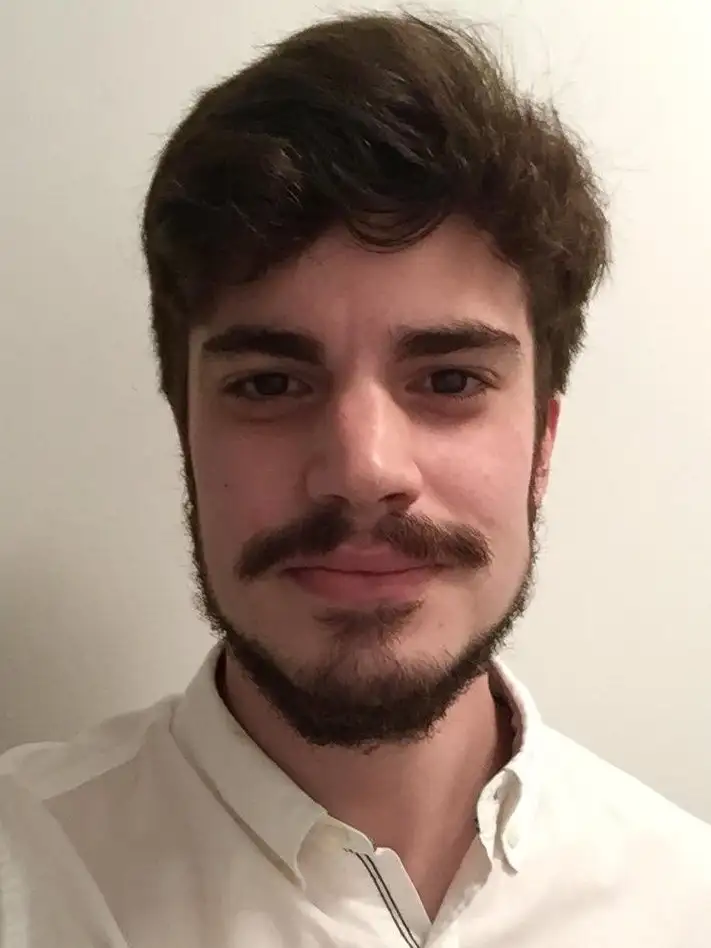
About
I am a researcher at Leme – Laboratório para a Redução da Violência. I hold an M.A. in Public Policy from the University of Chicago (Harris School of Public Policy) and a B.A. in Public Administration from FGV–EAESP.
My research interests include the economic activity, violent engagement, and territorial control of organized criminal groups, as well as political participation in elections, with a strong empirical and data-driven focus.
My recent research has been conducted on different facets of organized crime in Rio de Janeiro and gang violence in Haiti.
You can contact me at mathiasagrelo@gmail.com or mathias.lusquinos@lemelab.org.
Projects
- Mapping Criminal Governance and Territorial Enterprises in Rio de Janeiro (CNPq Scholarship “Conhecimento Brasil”) – with Joana Monteiro and Vinicius Peçanha: The project builds on a previous mapping of territorial criminal enterprises in the state of Rio de Janeiro (groups that combine territorial control with participation in licit and illicit markets) developed by Monteiro et al. (2022). It introduces a distinct analytical component by examining the governance dimension of criminal organizations, drawing on multiple data sources, including an original survey conducted with a partner organization and web-scraped data. The study also examines the effects of a public policy on the activities of these criminal enterprises.
- Shedding Light on Criminal Territorial Control (IDB – Organized Crime and Development in Latin America and the Caribbean) – with Joana Monteiro, Ana Paula Pellegrino, Ramón Chaves Gomes, and Amsatou Falilou Diop: This study investigates how criminal presence in Rio de Janeiro leads to access restrictions on service providers imposed by armed groups, using high-resolution, high-frequency geospatial data, and examines whether these restrictions stem from attempts by criminal groups to legitimize territorial control by allowing residents to access paid services free of charge.
- Echoes of Intervention: Conflict in the Interim of the Multinational Security Support Mission in Haiti – with Martin Castillo-Quintana, Camila Contreras, and Adee Weller: This working paper examines how the anticipation of international security interventions shapes gang violence and civilian mobility in Haiti. Using high-frequency, commune-level data on violence and mobility, it shows that as the U.N. Multinational Security Support (MSS) mission became more imminent, gangs strategically adapted by reducing inter-gang conflict, redirecting violence toward the state, and escalating remote attacks (dynamics that significantly curtailed civilian movement even before deployment).